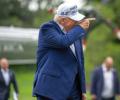
Trump has repeatedly claimed that he "helped settle" the tensions between India and Pakistan and that he told the nuclear-armed South Asian neighbours that America would do a "lot of trade" with them if they stopped the conflict.

The BRICS nations have expressed concern over the proliferation of trade-restrictive actions in the form of 'indiscriminate rising' of tariffs, particularly measures used as a means of 'coercion', cautioning that such practices risk marginalising the Global South countries.
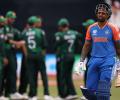
'Engaging with Pakistan at this stage sends out a message that undermines the sentiments of the people of India who stand firmly against any compromise on national security.'

India on Thursday said the issue of trade did not come up at all in talks between Indian and American leaders during its military clashes with Pakistan, virtually rejecting Washington's repeated claims that its offer of trade stopped the confrontation.

Times have changed, situations have changed, but the basic nature of superpower geo-politics remains the same and so also India's diplomacy -- call it non-alignment, strategic autonomy or neutrality; it all depends on the time scale, notes Rup Narayan Das.

Congress leader Sonia Gandhi criticizes the Modi government's stance on Palestine, calling it a 'profound silence' and an abdication of humanity and morality. She argues that India needs to demonstrate leadership on the issue and that the government's actions are driven by personal friendship rather than constitutional values or strategic interests.
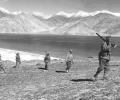
As India and China continue to face off across the Himalayas six decades later, the echoes of that earlier conflict remain unmistakable. The core of China's sensitivity lies not in maps or mountain passes, but in its perception of sovereignty over Tibet, points out Dr Kumar.
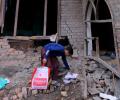
Amid escalating tensions between India and Pakistan, the US has said it will not get involved in the conflict, stressing that it is "fundamentally none of our business." While acknowledging concerns about a potential nuclear war, Vice President J D Vance emphasized that the US cannot control India and Pakistan, but can encourage them to de-escalate. The US has also reiterated its support for direct dialogue between the two countries and encouraged efforts to improve communications.
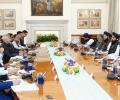
The opposition on Saturday termed the absence of female journalists from a press conference of visiting Afghan Foreign Minister Amir Khan Muttaqi "unacceptable" and an "insult to women", and said Prime Minister Narendra Modi's silence in the face of such discrimination exposes the "emptiness" of his slogans on Nari Shakti.

'I am pleased to announce the Governments of India and Pakistan have agreed to an immediate ceasefire and to start talks on a broad set of issues at a neutral site.'

Iranian Foreign Minister Abbas Araghchi visited Pakistan and called on both India and Pakistan to "exercise restraint" amid rising tensions between the two countries following the Pahalgam terror attack. Araghchi, who is scheduled to travel to India on Thursday, emphasized the importance of easing tensions and preventing further escalation. During his talks with Pakistani officials, Araghchi and Pakistani Foreign Minister Bilawal Bhutto Zardari reaffirmed their commitment to strong Pakistan-Iran ties and agreed to boost cooperation in trade, energy, and connectivity. Both sides also exchanged views on the situation in South Asia and the US-Iran talks, while agreeing that complex regional issues could be resolved through diplomacy and negotiations.
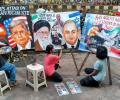
Prime Minister Narendra Modi on Sunday conveyed to Iranian President Masoud Pezeshkian India's 'deep concern' over Iran's conflict with Israel and called for immediate de-escalation of the situation through 'dialogue and diplomacy'.
India has to fill in all the critical gaps in missiles, ammunition, sensors and stockpile in the fastest possible manner, focusing on the critical instruments that worked this time, asserts Shekhar Gupta.
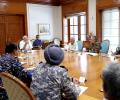
'One good outcome of Operation Sindoor -- perhaps, its best outcome -- could be that India has resumed meaningful contact directly with Pakistan at the military-to-military level,' observes Ambassador M K Bhadrakumar.

Pakistan seized 19 Afghan military posts and "terrorist hideouts" in response to alleged attacks by Afghan forces. Kabul claims significant Pakistani casualties. Tensions escalate following repeated attacks by the Tehreek-e-Taliban Pakistan (TTP).

The post further read that "at a moment of heightened regional turbulence", President Trump "demonstrated great strategic foresight and stellar statesmanship through robust diplomatic engagement with both Islamabad and New Delhi," Dawn reported.
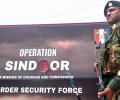
Their shared brief: To assert India's case with clarity, rebut hostile narratives, and secure enduring partnerships for global counter-terror cooperation.
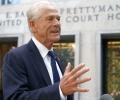
Former White House trade advisor Peter Navarro has criticised India for continuing to procure Russian oil, alleging profiteering and contributing to the Russia-Ukraine war. India defends its energy procurement as driven by national interest and market dynamics.
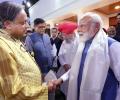
Prime Minister Narendra Modi's energy, dynamism and willingness to engage remains a 'prime asset' for India on the global stage but deserves greater backing, Congress MP Shashi Tharoor said on Monday, in remarks that are likely to irk his party and widen the growing cracks in his ties with its leadership.

For too long has Pakistan gotten away with running with the terrorists and hunting with the forces. This duplicity needs to end, asserts Saisuresh Sivaswamy.

In the short run, the Trump presidency has already ensured one thing: The assumptions of the past can no longer guide the strategies of the future, points out Manish Dabhade.

India hoped that the agreement will lead to a safe and sustained supply of humanitarian assistance to the people of Gaza.

According to the DRDO chairman, the BrahMos missile, primarily launched from Sukhoi Mk 1, was used during the offensive phase.

COVID-19 has emerged as an important form of diplomatic currency around the world as nations try to showcase their soft power gains. In this race, India has an edge as India is already a pharmaceutical giant having produced some 60 per cent of global vaccines and now justly seeking to strengthen ties and expand its influence in its neighbourhood and beyond, observes Dr Rajaram Panda.
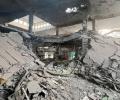
'I am worried that Pakistan will still feel compelled to take substantive military action beyond this apparent drone activity.' 'If so, the crisis could persist for a while more and dangerous days are still ahead.'
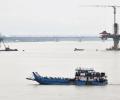
'China could intentionally release excess water.' 'The North East is already flood-prone during the monsoon, and even a controlled release from Chinese dams (during the monsoon) could worsen flooding.'
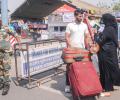
United States Charge d'Affaires Natalie Baker on Wednesday met Deputy Prime Minister and Foreign Minister Ishaq Dar as part of efforts to de-escalate tensions with India following the Pahalgam terror attack on April 22 in which 26 people were killed.
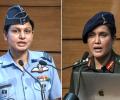
India conducted precision strikes on nine terror targets in Pakistan and Pakistan-Occupied Kashmir, targeting terrorist infrastructure to deter further attacks. The operation, codenamed 'Operation Sindoor', was detailed by two women military officers, Col Sofiya Qureshi and Wing Commander Vyomika Singh, at a press briefing in New Delhi. The officers highlighted the precise nature of the strikes, emphasizing the use of "niche technology weapons" to ensure no collateral damage. The briefing showcased India's military prowess and the growing role of women in the armed forces.

The IDF admitted that the map "fails to precisely depict borders".

The Congress party has claimed credit for the extradition of Tahawwur Rana, an accused in the 2008 Mumbai terror attacks, from the US, saying the Modi government did not initiate the process and merely benefited from the "mature, consistent and strategic diplomacy" begun under the UPA. Former Home Minister P Chidambaram said the government did not secure any breakthrough to make the extradition possible, nor is it the result of any grandstanding. He added that it was a testament to what the Indian state can achieve when diplomacy, law enforcement and international cooperation are pursued sincerely and without any kind of chest-thumping. Chidambaram detailed the UPA government's efforts in securing Rana's extradition, citing the registration of a case against him in 2009, diplomatic pressure on Canada and the US, and continued efforts despite legal setbacks. He highlighted the role of the UPA in securing Rana's conviction for other terrorism-related offences and the cooperation between the US and Indian agencies in gathering evidence and securing his extradition. The Congress leader further stated that it was the UPA's groundwork that paved the way for Rana's extradition, even after the change in government in 2014.

Pakistan on Thursday said that no back channel diplomacy was going on with India after the neighbouring country refused to send its cricket team for the Champions Trophy
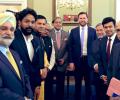
In a post on X, the Indian Embassy in the US said that the all-party parliamentary delegation led by Tharoor called on Vice President Vance this morning.
Glimpses from India and around the world that will make you smile and cry.

Tirumurti said India 'has been in touch with all concerned parties. It is our considered view that the issue can only be resolved through diplomatic dialogue.'

UN Secretary-General Antnio Guterres expressed concern over the heightened tensions between India and Pakistan, calling for maximum restraint and urging both countries to step back from the brink. Guterres offered his "good offices" to both governments in the service of peace and condemned the recent terror attack in Pahalgam, emphasizing the need to bring those responsible to justice. He also stressed that a military confrontation would be detrimental and could easily spin out of control. His remarks came hours before a closed consultation of the UN Security Council on the matter, requested by Pakistan. The UN Secretary-General highlighted the need for de-escalation, diplomacy, and a renewed commitment to peace.

India on Saturday said it was deeply concerned over the 'evolving escalation' in West Asia and urged all sides to exercise restraint and return to the path of dialogue and diplomacy.
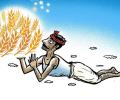
India's policy for agriculture trade must move commodity-by-commodity to gain maximum benefits as US President Donald Trump's 26 per cent tariff on exports from the country take effect, said agriculture economist Ashok Gulati in a recent policy paper.

Congress leader Priyanka Gandhi Vadra launched a scathing attack on the government regarding the Pahalgam terror attack, questioning intelligence failures and demanding accountability.

Presiding over the third Atal Bihari Vajpayee memorial lecture that was delivered by former Singaporean diplomat Bilahari Kausikan in New Delhi, Jaishankar also hailed Vajpayee's stint as an external affairs minister, and his role in strengthening India's ties with the United States and Russia.

External Affairs Minister S Jaishankar discusses India's approach to cross-border terrorism following the Pahalgam attack, emphasizing a firm response and no compromise on nuclear blackmail.
